
Medical Spanish for Healthcare Professionals
Personalized 1-on-1 training for clearer patient communication.
No commitment. We’ll discuss your level, clinical context, and goals.
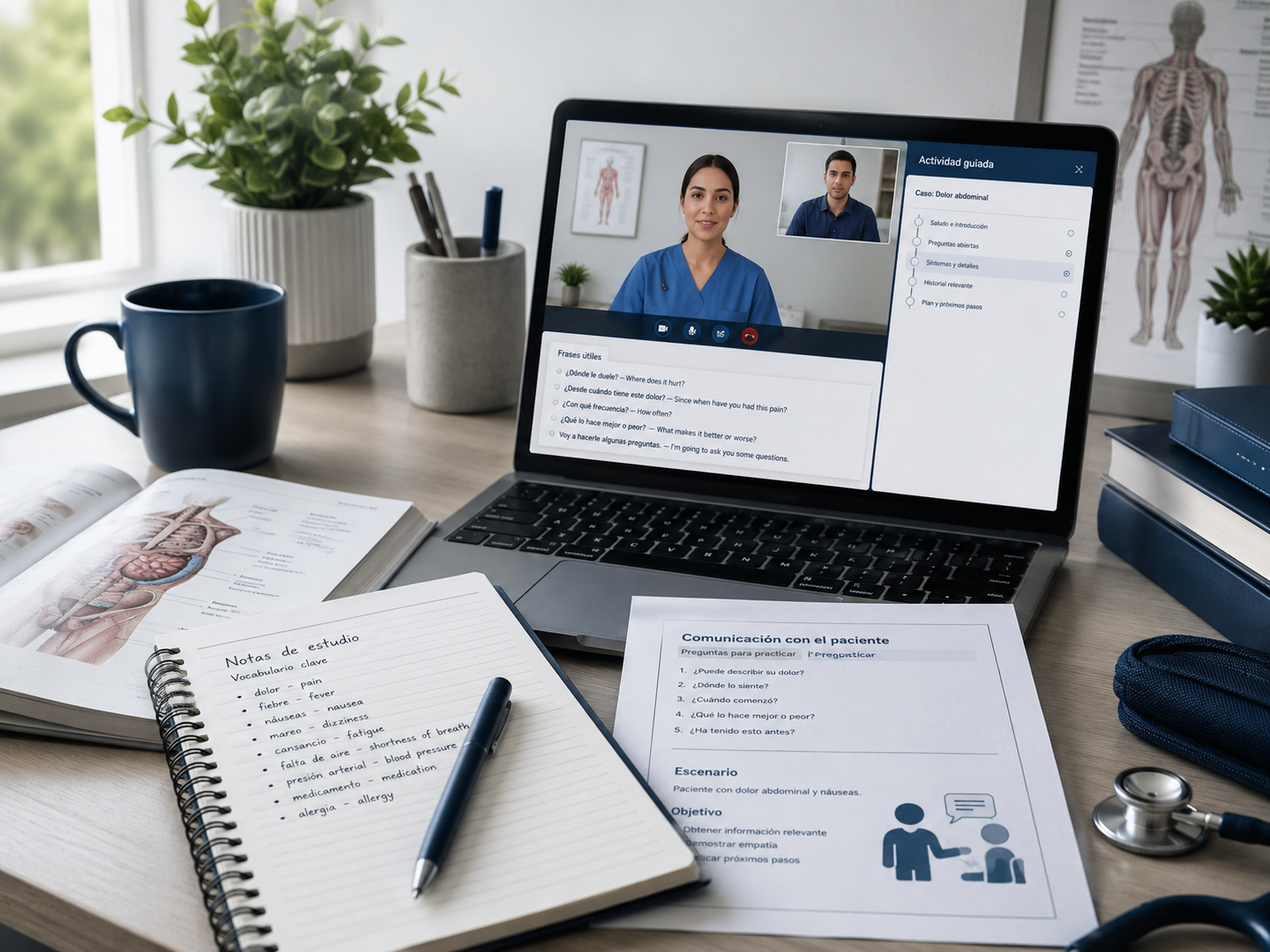
Professional materials for guided practice
Resources that support real patient communication.
Sessions incorporate Medical Spanish materials, videos, dialogues, and guided activities that support communication in healthcare settings. The materials are used as a starting point for speaking practice, feedback, and clinical conversation.
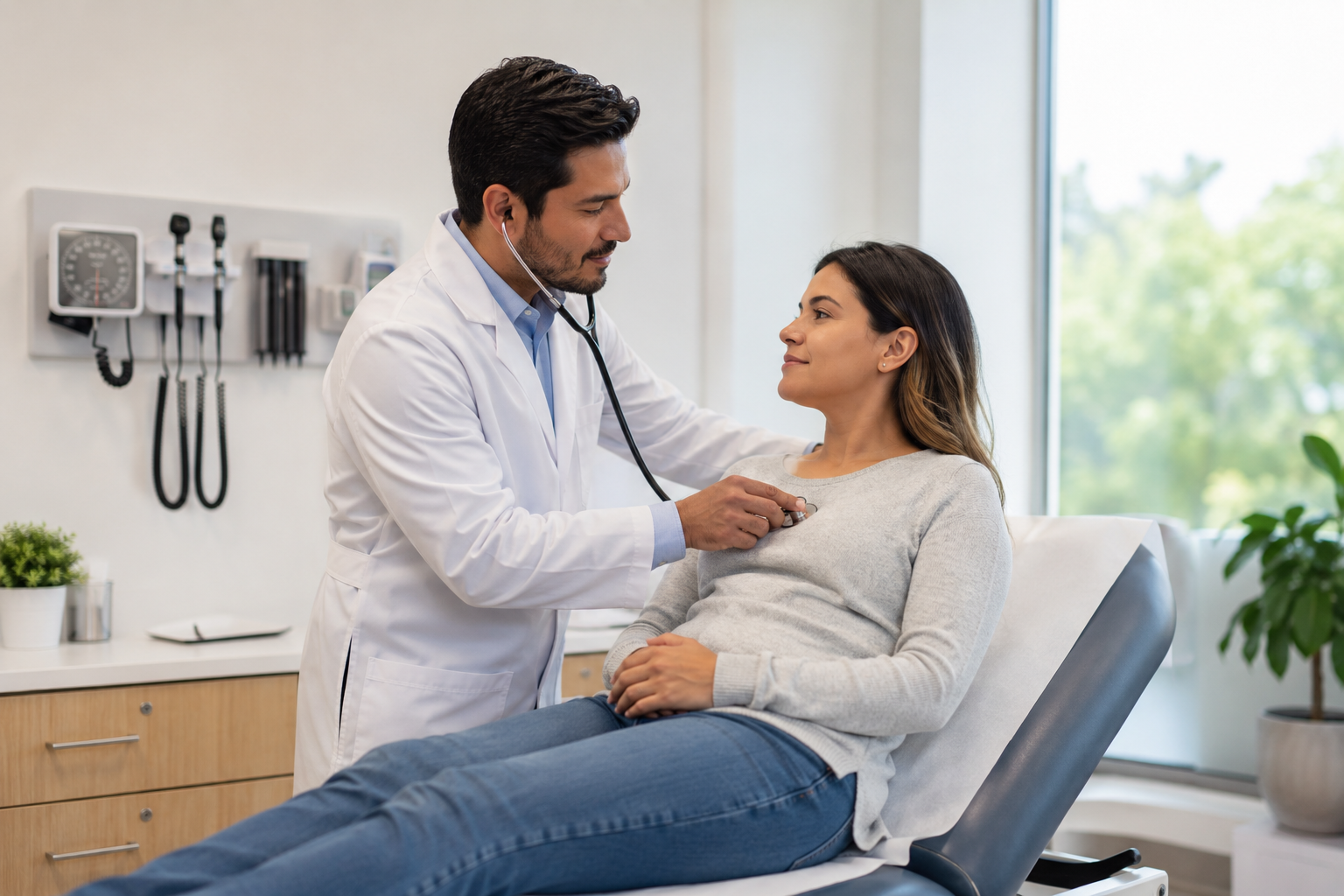
Clinical scenarios in context
Language practiced through realistic healthcare interaction.
Each session is built around realistic situations: intake interviews, symptoms, medical history, explanations, emergency communication, and follow-up conversations. The clinical context helps you activate the language naturally.
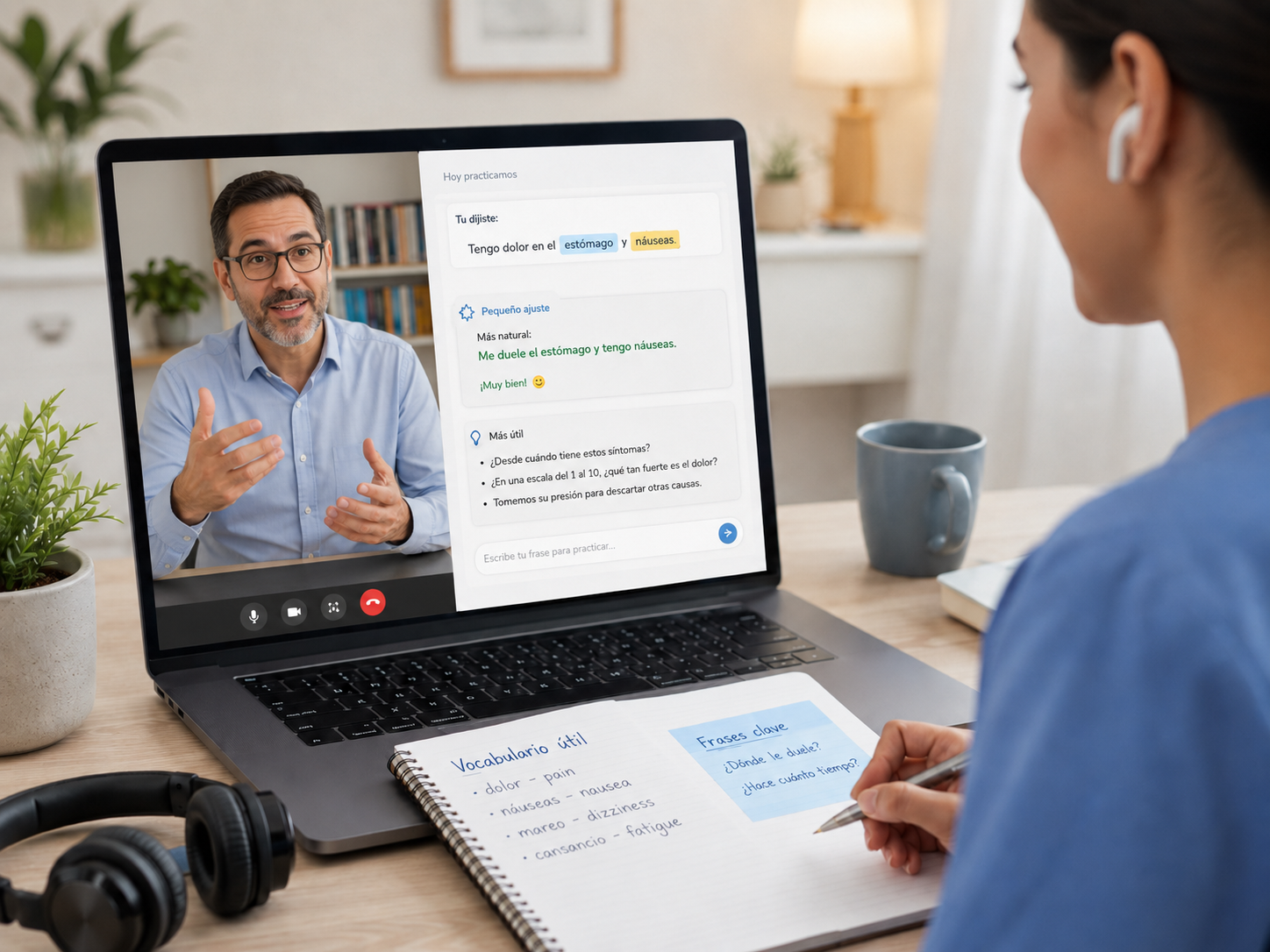
Personalized Communication Feedback
Feedback integrated naturally into the conversation.
Corrections, explanations, and suggestions are integrated into the session as you speak — helping you communicate with greater clarity, accuracy, and confidence in clinical settings.
No commitment. We’ll discuss your level, clinical context, and goals.
THE CURRICULUM
01
Intake interviews
Chief complaint, medical history, symptoms, allergies, and the full patient intake conversation.
02
Physical Examination
Guiding patients through basic examinations with clear instructions and practical clinical vocabulary.
03
Explaining Conditions
Communicating findings, conditions, and treatment plans in language patients can understand.
04
Medication Instructions
Dosage, frequency, prescriptions, side effects, and patient instructions.
Urgent symptoms, immediate instructions, and high-pressure clinical interaction.
05
Emergency Communication
06
Follow-Up Conversations
Progress checks, recovery, treatment adherence, and ongoing patient communication.
A Guided Approach to Clinical Spanish Communication
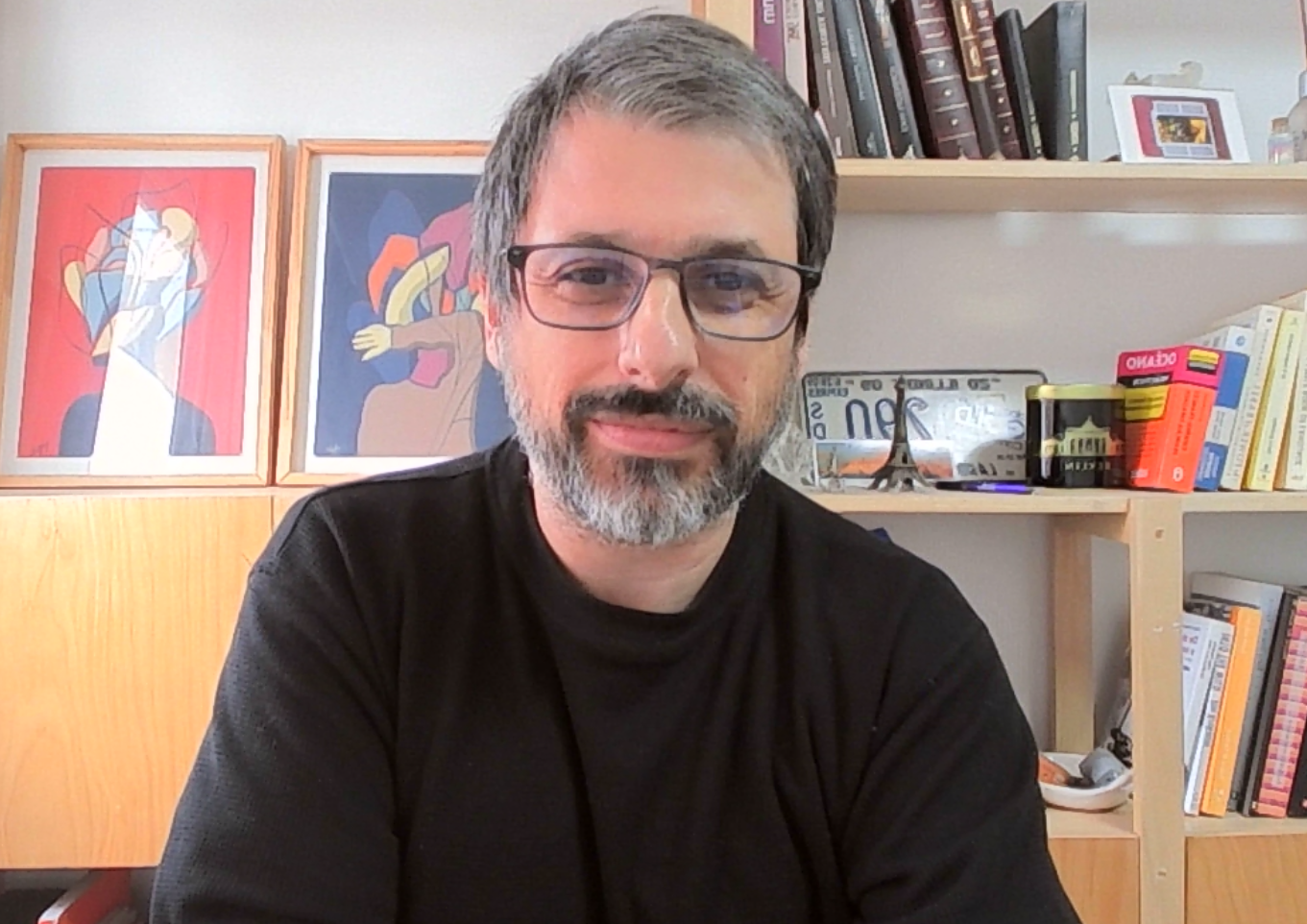
GUIDED BY DIEGO ZACARIAS
I’m a Spanish teacher focused on helping adults and professionals develop real communication skills in Spanish.
In the Medical Spanish Program, I adapt guided conversation, clinical materials, and personalized feedback to each healthcare professional’s level, specialty, and goals.
Ready to Improve Your Medical Spanish for Patient Communication?
Let’s talk about your goals, current level, and professional context to see whether this program is the right fit.
No commitment. We’ll discuss your level, clinical context, and goals.
FAQs
-
No. The program can be adapted to all levels, including complete beginners, intermediate learners, and advanced speakers who want to improve their communication in medical and clinical contexts.
If you are a beginner, we start with essential questions, patient interaction, and clear communication strategies. If you already speak Spanish, we focus on fluency, accuracy, and the language you need in your professional setting.
-
No. The program is designed for healthcare professionals in different roles, including doctors, nurses, medical students, therapists, and other professionals who interact with Spanish-speaking patients.
The content is adapted to your clinical context, your level of Spanish, and the kinds of conversations you need to have with patients.
-
You will practice real patient communication: asking questions, understanding answers, giving simple explanations, clarifying symptoms, discussing medical history, and responding to common situations in clinical settings.
The focus is not only on vocabulary. You will learn how to use Spanish in real conversations with guidance, correction, and personalized feedback.
-
Sessions are private, online, and personalized. Each meeting combines guided conversation, clinical scenarios, vocabulary in context, and feedback on how to communicate more clearly.
Depending on your level and goals, we may use dialogues, videos, patient intake questions, role-play, short readings, or materials from a Medical Spanish textbook.
-
Yes. The program can include materials from An Introduction to Medical Spanish by Robert O. Chase, along with videos, audio, clinical dialogues, and personalized practice activities.
You do not need to rely only on the book. The materials are used as support for real communication practice.
-
The program is designed as a continuous monthly membership to ensure long-term clinical fluency. There is no fixed end date; you can maintain your subscription for as long as you need to achieve your professional communication goals.
Since medical schedules are unpredictable, your membership is fully adaptable. If you go on vacation or face a demanding hospital rotation, your unused live session credits roll over to the next month (up to a maximum of 2 hours), or you can easily adjust your training pace. You have total control and can cancel or pause your subscription at any time.
-
You schedule your sessions through an online calendar. You can book the times that work best for you, depending on availability.
Sessions can usually be taken in 30-minute or 60-minute formats, depending on your plan and learning needs.
-
Yes. The program is flexible and does not require a long-term contract. You can choose the format that works best for you and continue according to your goals, schedule, and availability.
-
The first conversation is a brief Zoom meeting to discuss your goals, your Spanish level, your clinical context, and the best format for your learning needs.
It is not a formal test. It is a way to understand what you need and decide whether the program is a good fit.