

When Will I Feel Comfortable Speaking Medical Spanish? You're Asking the Wrong Question
Comfort in Medical Spanish is not something that arrives after enough studying. It's something you build from the very first session — and here's why that distinction matters.

Why You're Still Waiting to Feel Ready to Speak Medical Spanish
Many healthcare professionals delay speaking Medical Spanish until they feel ready. Here's why that moment never comes — and what actually works instead.

What Your Patients Will Say Instead of What You Studied
Medical Spanish textbooks teach clinical vocabulary. But patients don't always speak like textbooks. Here's what that gap sounds like — and what it means for your clinical communication.
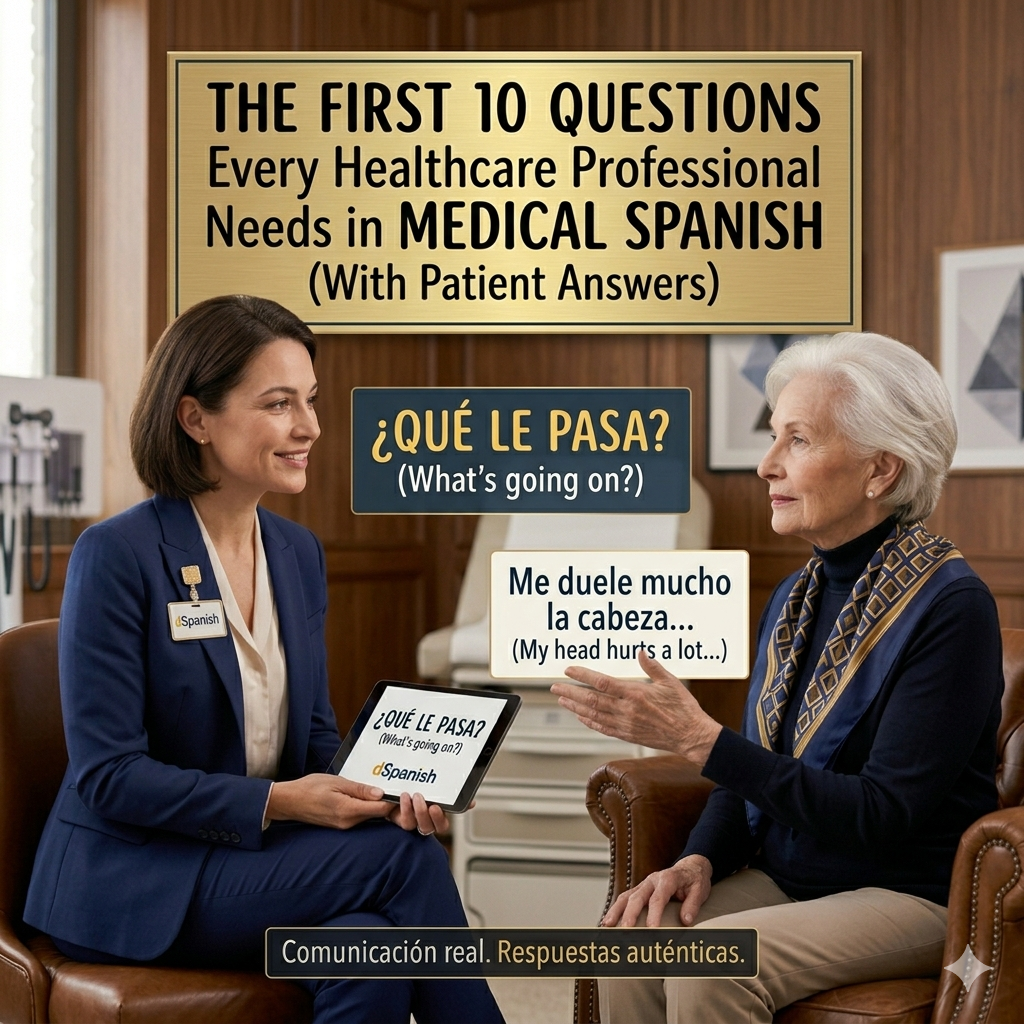
The First 10 Questions Every Healthcare Professional Needs in Medical Spanish (With Patient Answers)
Communicating with Spanish-speaking patients is not about memorizing medical vocabulary. It starts with knowing the right questions — and being ready for what comes after them.
Here are the 10 most essential questions for clinical interactions in Spanish, each one with the real answers patients give in everyday language.

Medical Spanish for Healthcare Professionals: Why Direct Communication Still Matters
Medical Spanish helps healthcare professionals become more present in conversations with Spanish-speaking patients. Interpreters remain essential for safety and accuracy, but direct communication — even partial — can build trust, improve connection, and make the clinical encounter feel more human.
Why Healthcare Professionals in the U.S. Learn Spanish
Across the United States, doctors and nurses are learning Spanish not as a hobby, but as a necessity. Translation tools help, but nothing replaces real communication with a patient.